


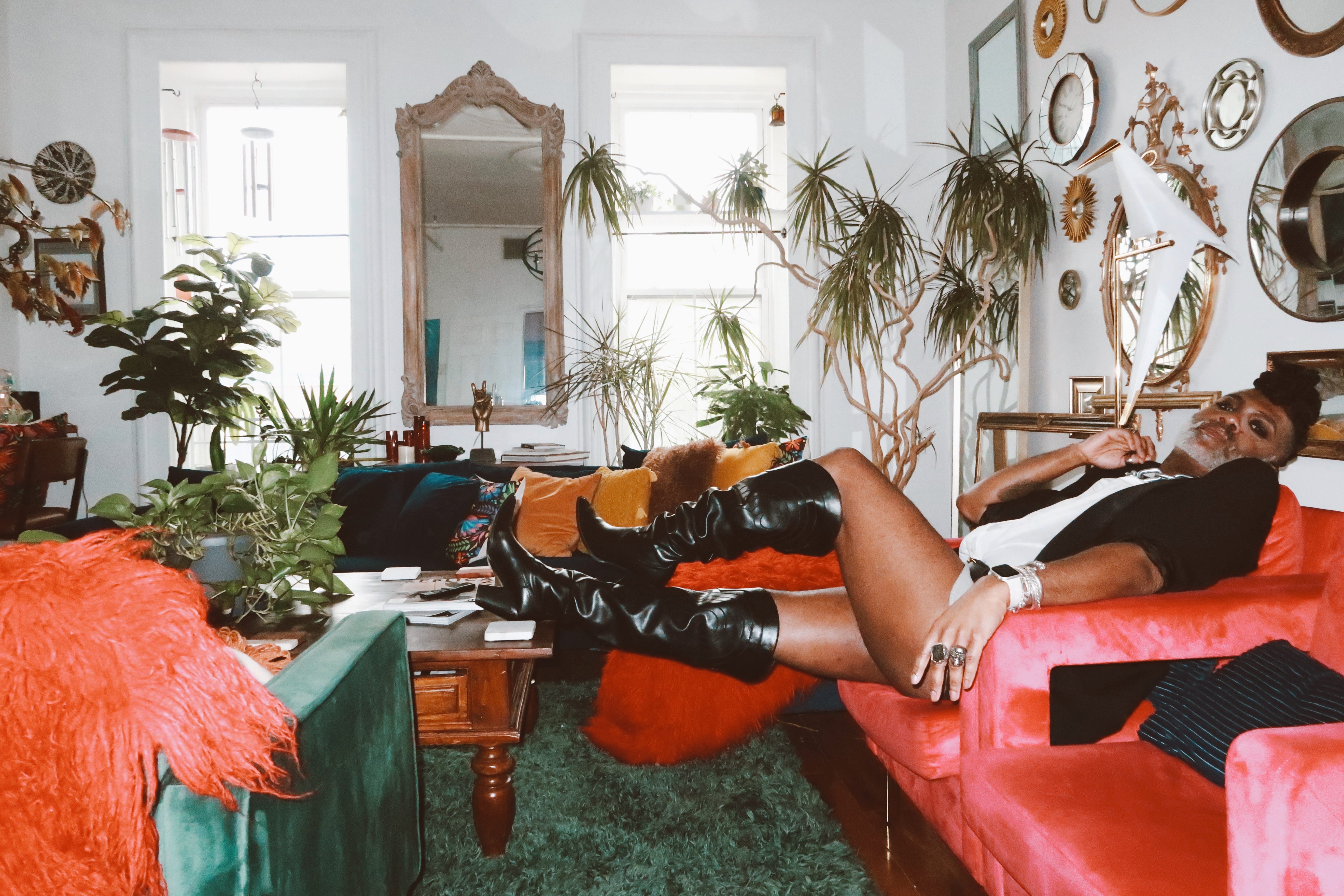
I can’t quite remember the first time I saw Kiley, but his face is unforgettable. Striking in its symmetry, his features are proof of the genetic jackpot and that humans can’t help but gawk at the golden ratio.
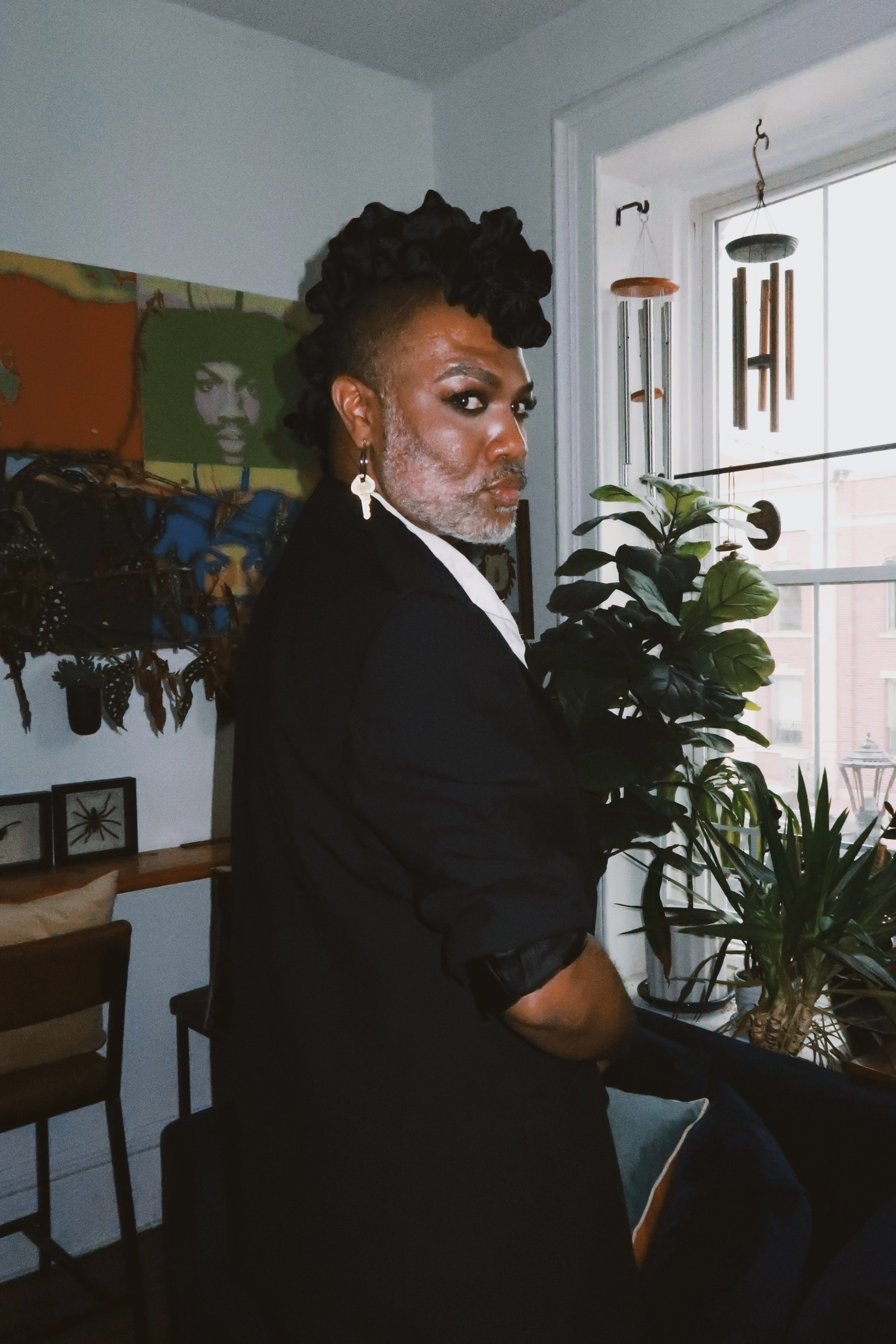
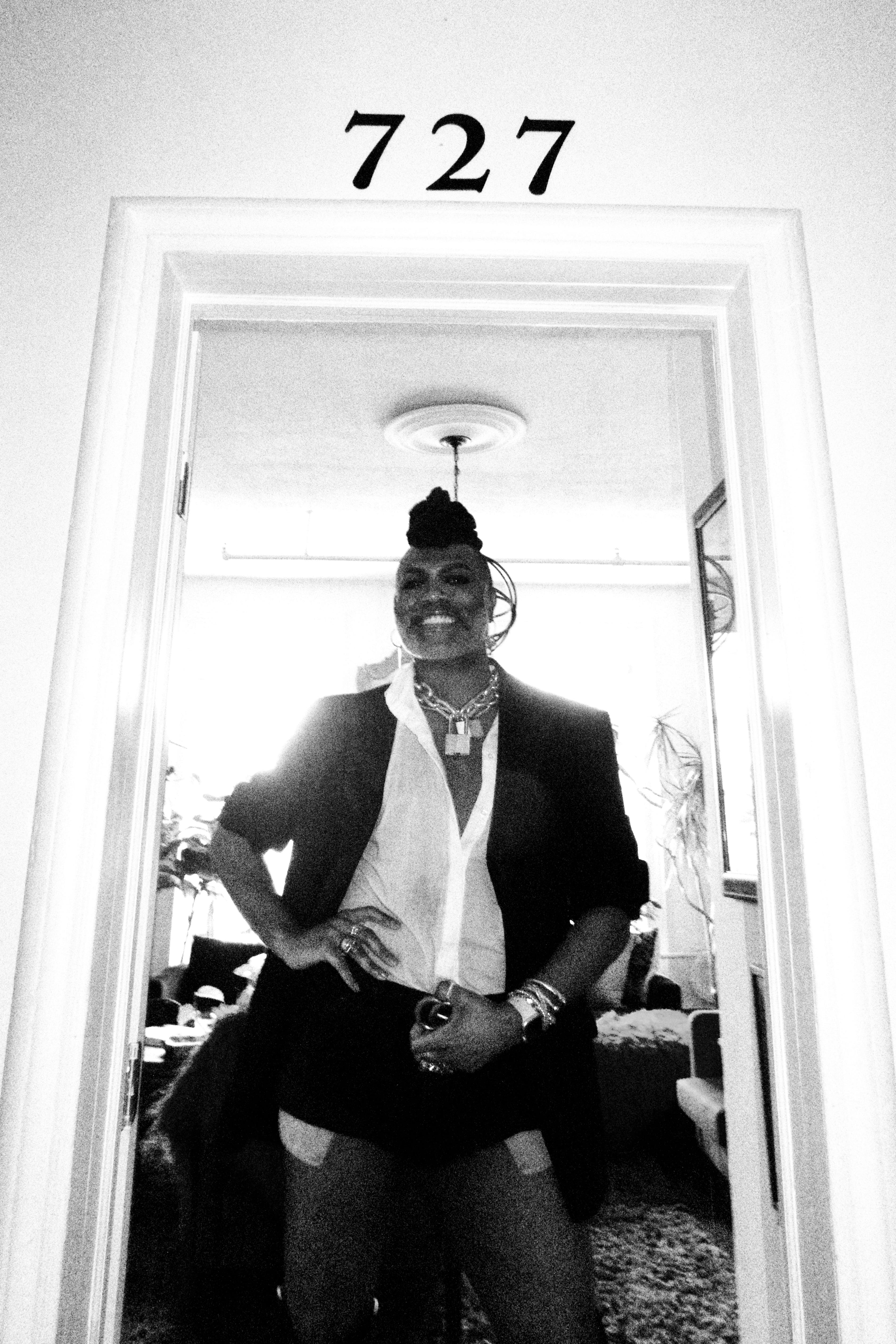
It just so happens that Kiley likes to play these features up: lash extensions and sparkles, lipgloss and jewels; no detail is overlooked or under-embellished in his personal presentation. Think Grace Jones one day, Beyoncé the next, and a hint of Naomi on most.
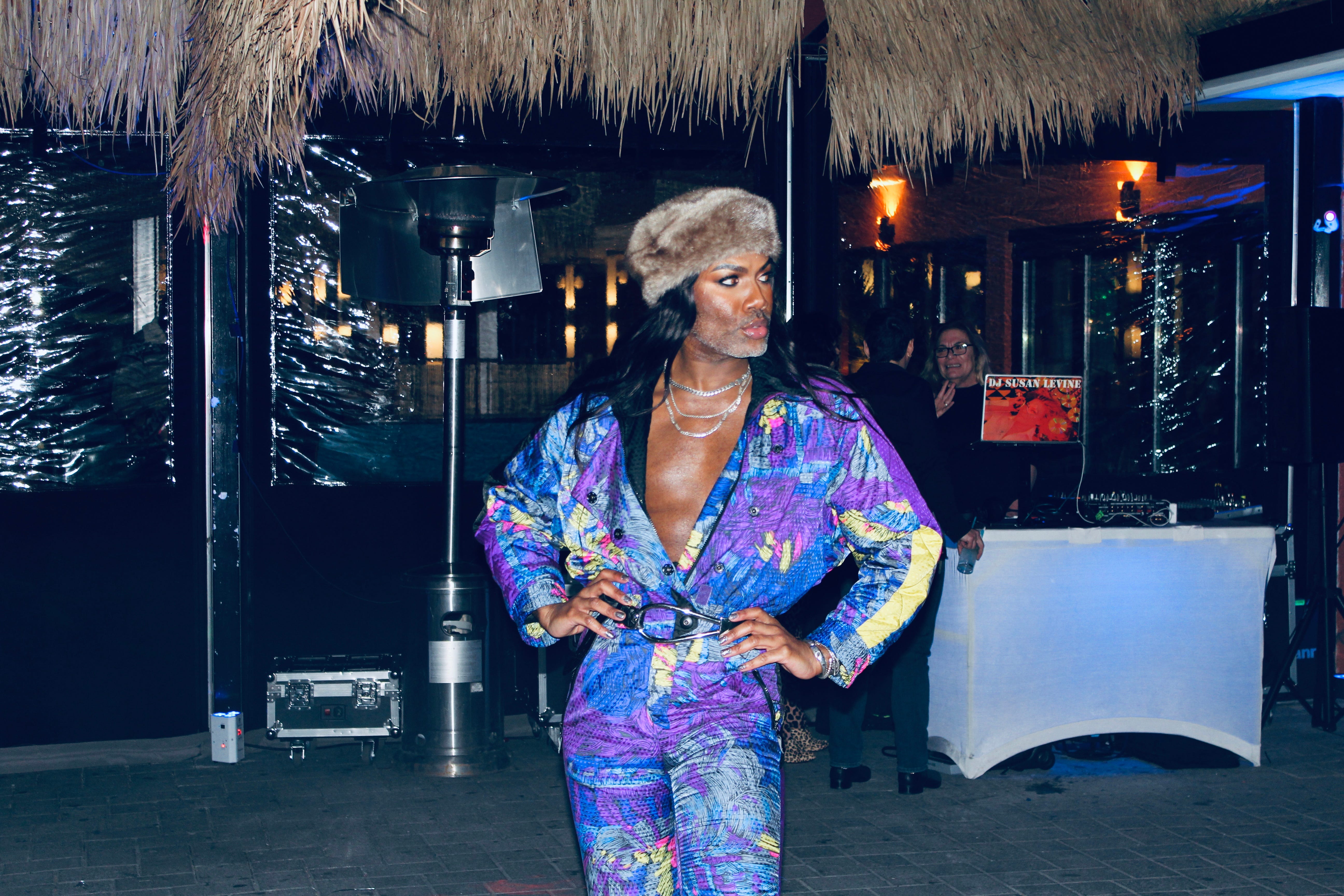
When I first met Kiley, at some Fire-and-Ice-themed party on the banks of Newburgh, NY, his hair all but swept the dance floor behind him, sleek and parted down the middle à la Kim K.
He was wearing a ski suit, and somehow managed to look hotter than those of us dressed as fire.
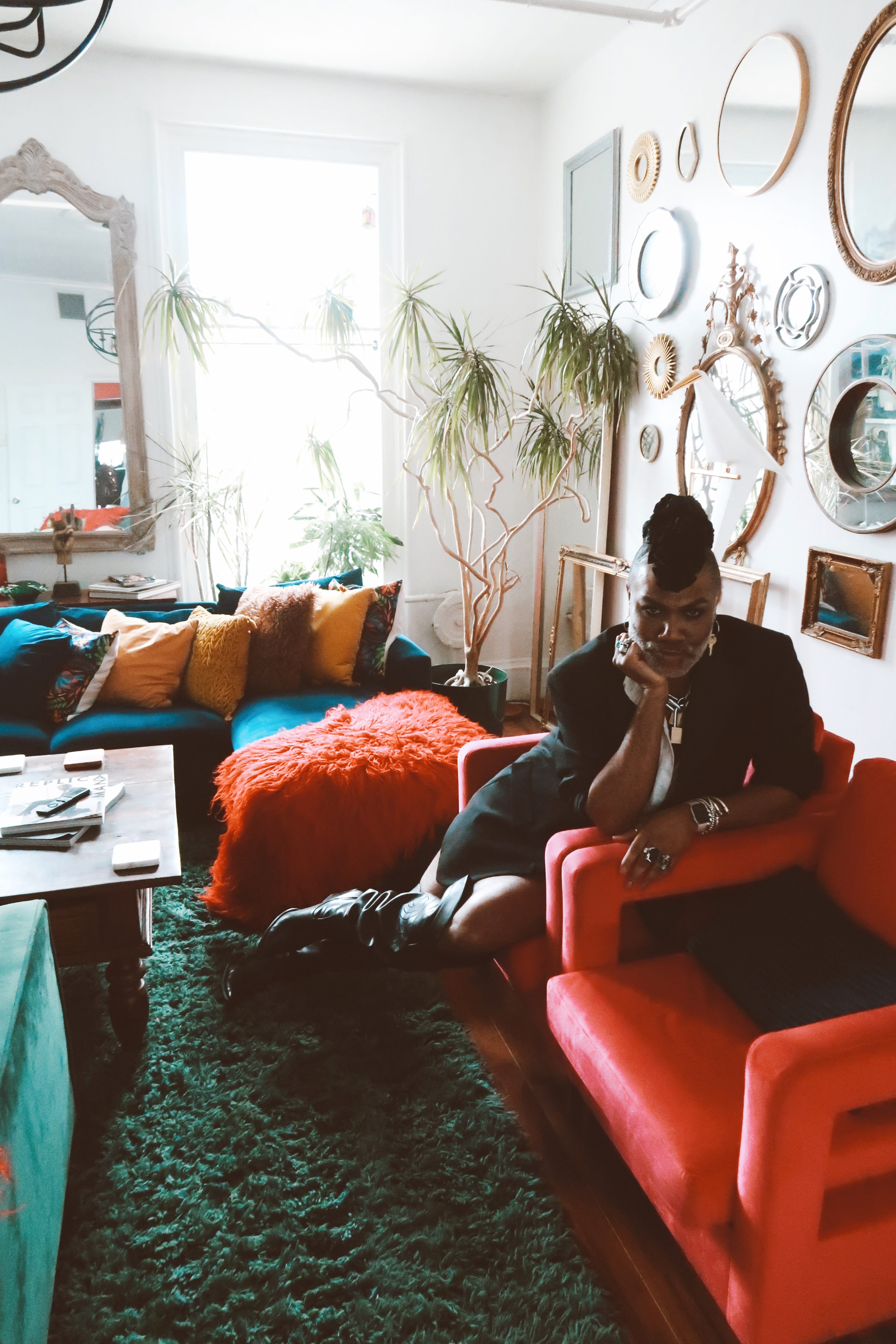
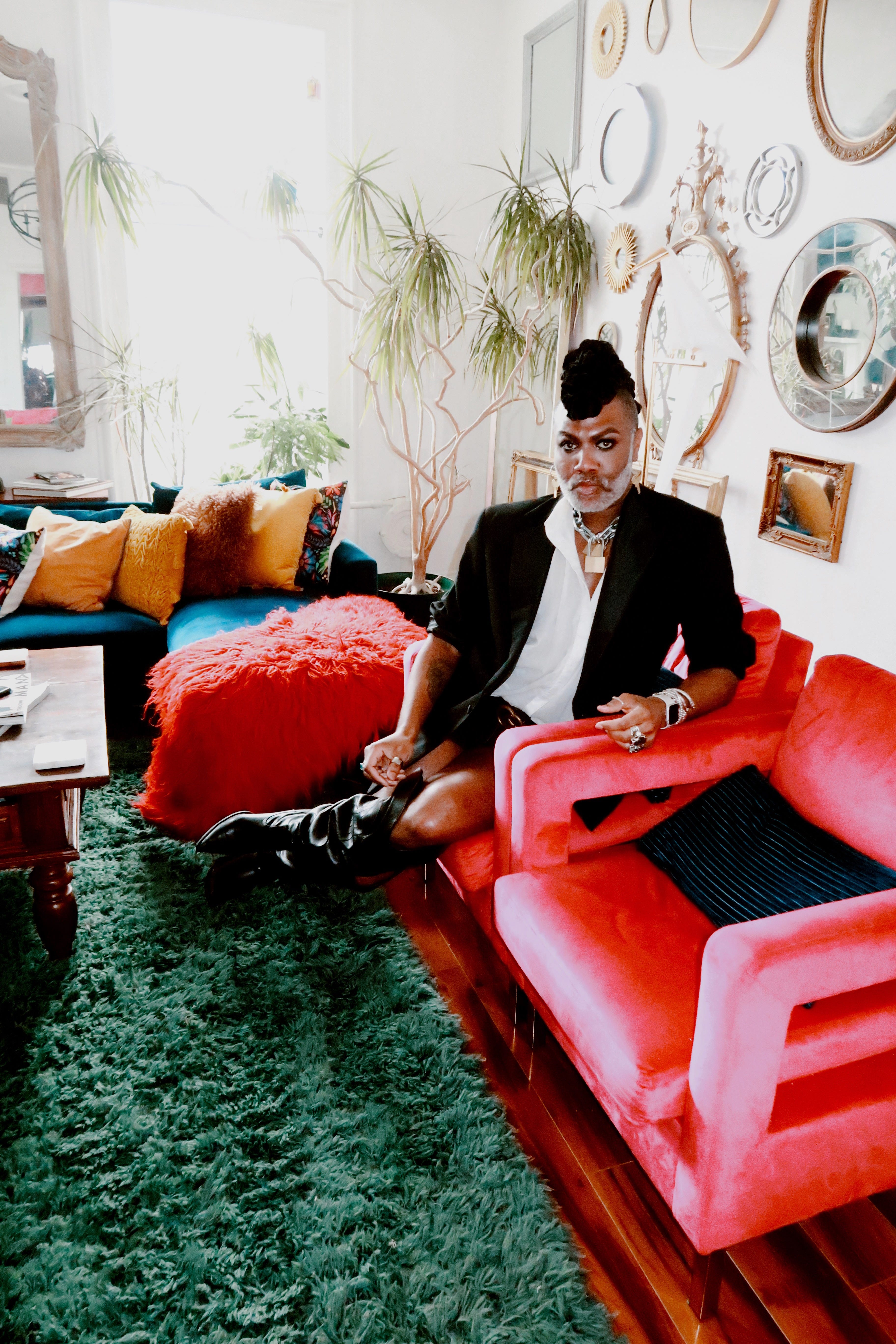
How had this Black, queer man from the middle-of-nowhere Midwest learned to embody feminine ideals of beauty so boldly? I had the honor of being welcome into Kiley’s home – which is equally as dazzling in all its eclectic art and decor – to ask him myself.
Read on to learn how a mama who believed in him from day one (and whom Kiley is quick—and right—to credit for his good looks), being bussed to school from ‘the other side of town,’ and navigating the ugly side of racism in America, armed this multi-hyphenate MUA, hair stylist, and fashionista with an unapologetic drive to make the world more beautiful.
KILEY: So, the things I like to do—fashion, hair, makeup. I do it all, but hair predominantly pays the bills, and I’ve been in the industry a long time. Graduated cosmetology school in 2000.
I see beauty in everything. That’s always been who I am. And if something isn’t conventionally beautiful, I find a way to see it that way—or I make it beautiful. My perception of beauty is very personal, but I grew up in the '90s, when beauty was defined in a very specific way.
That’s where my aesthetic began—glamour, old-school glamour.
MOLLY: I want to press on that. You grew up in the ’90s, when beauty had a narrow definition. Did you push against that? Because it sounds like you had your own sense of beauty.
Kiley: I always had my own idea of beauty, even though it was influenced by what was considered beautiful at the time. I was always an effeminate boy. So I saw things as pretty—feminine, more womanly. Back then, male models were rugged and handsome. They weren’t made up the way models are now. Today, we’re all models. We celebrate imperfections, gaps, quirks.
It’s perfect for me.
But I remember not fitting the norms back then and wanting to carve myself out as a beautiful man. There was a time when I did drag regularly—I went through high school in full drag every day.
Molly: Tell me about that! And tell me… where did you get the cojones? To put it crudely.
Kiley: Honestly, I don’t even know. It’s just in me—my artistic, probably slightly autistic, brain. I kinda thought, “If I act like a girl, then I should just dress like one.”
When I was younger, I was always playing with dolls, always with the girls. People said, “You act like a girl.” It didn’t even feel derogatory. It was just… a fact.
So when I got to high school—a magnet school where you could major in art, science, or math—I majored in art. And I really found myself. I had a crew: gay kids, girls, artists from all grades. We could be ourselves.
Molly: From what I remember, most people at that age are trying not to stand out, and you went the other direction.
Kiley: Oh no, I always stood out. Even now, if everyone’s doing something, I go the other way. It could be to my detriment, but I’m like, “If everyone’s into it, why should I be?”
What you spend your time doing is what you become.
There was a time I was the youngest in my friend group. My mom always accepted me, and we became the safe space. My gay friends whose parents didn’t know—they came to my house.
Molly: So your mom was that safe space. She sounds amazing.
KILEY: Oh, it’s my mom. 100%. She’s a Taurus. I’m a Leo. She was tough love, not abusive, but definitely “spare the rod, spoil the child.”
She’s always been my advocate. My biggest fan.
She used to say this African proverb: “If there’s no enemy within, the enemy outside can do no harm.”
That’s how I grew up. I was always loved at home.
I remember in middle school, in Wichita, Kansas—I got bussed to the white side of town. I was the last pickup. When I got on the bus, it was packed—three to a seat—and nobody would let me sit. They’d scoot over or block the seat.
This was all before even getting to school. Imagine starting your day like that. So I figured, okay—I’ll just walk to an earlier bus stop a block or two away and get on before the crowd. That way I could get a seat.
I didn’t tell anyone. I didn’t want to cause drama. I felt embarrassed. But I solved it. I got up early and got my seat.
Molly: When did you start to feel restless? Was there a part of you like, “Maybe the world’s bigger than Wichita?”
Kiley: There was a part of me that was like—this isn’t working out.
I remember when I wanted to work at MAC in Wichita, and they were like, “You’ll never work here.” (They could say anything back in the day.)
You know, I have worked at MAC—here in the Poughkeepsie. And for some reason, my manager just didn’t want to give me the same opportunities that other people were getting.
I remember—I didn’t have a car. I lived in New Paltz and had to take two buses. Two buses. To work at MAC.
And the manager was like, “Well, I don’t think you’re serious, because you don’t drive.”
Molly: Can I just say—I think I’m finally getting all the ways you’ve chosen to see the beauty in your life. A lot of people would’ve been weighed down by the racism, by being seen as “different.” But you—that’s your superpower. You chose to see God—or spirit, or whatever you call it—as protecting you, even when things were hard. Does that resonate?
Kiley: I mean, I never thought about it that way, but yes!
Molly: Yeah. I think people who are attuned to their purpose, their calling, or just who they are—even if it goes against norms—they’re channeling that god-connect. And you’ve done that so beautifully.
Let’s fast forward to the present day. MAC is behind you and you’re now a multi-hyphenate. How did you get here?
Kiley: I think a big part of cultivating who I am was when I moved to New Paltz. It was just small enough, but different enough. Queer-friendly, “Come as you are.” It really celebrated me—all that was me.
And at the time, I was really the only diversity that town had. But it’s okay. That’s when I really became super comfortable with myself.
I have some friends I’m still close with from back then. There used to be this thing called ‘80s Ladies Night at this club called Cabaloosa. We’d get dressed up, dance, hang out. The ‘80s really lent itself to androgyny—it lent itself to me.
I found a kinship with people. They loved who I was—all facets of me. That really helped.
Molly: It sounds like you were really being received in New Paltz, even though a lot people were telling you to move to NYC. You were blossoming there.
Kiley: Right. Why disrupt that? You know, I feel like—I have everything I need.
And it’s making me think of something you said at the beginning of our conversation: when everybody goes one way, you go the other. I’ve always been a little left of center. If everyone’s going to New York City, I’m fine right where I am. But I’m also close enough that if I get the itch, I can scratch it—and I do.
And when I do, I strut, honey! People still respond to it the same way they did when I was 21—I'm 43 now. It’s the same energy, the same vibe, the same adulation.
Molly: Would you say that by honoring who you are—even when it doesn’t fit in the box—the universe delivers that much more? Because I’ve seen that over and over. Even in my own life, I tried so hard to do the whole corporate thing and it never felt right. But once I let it go, everything started falling into place.
Have you experienced that too? That the more you live out loud as Kiley, the more aligned things become?
Kiley: Of course. The universe always has my back. What’s meant for me will come to me, in the time the universe allows it.
Molly: Is there someone in your life now who’s been an expander or a mentor? Someone who represents where you want to be? Or are you that person for yourself now?
Kiley: I am that person for myself.
Molly: Okay, final question. What advice would you give to someone who’s struggling to find or embrace their authentic self?
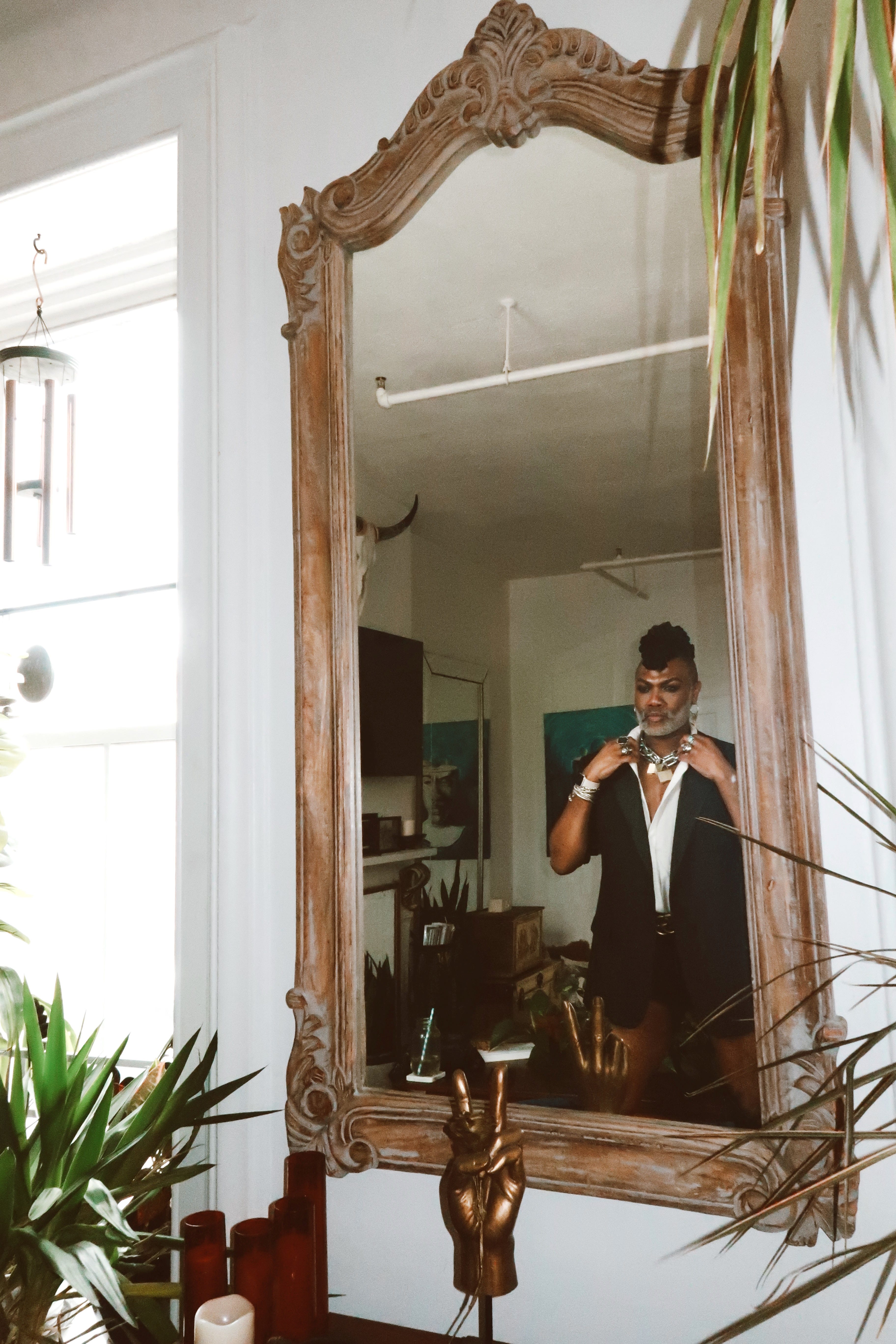
Kiley: My advice? Find out what that even means for you. And don’t apologize for it. Surround yourself with good people, real friends. Figure out what brings you joy. Do your research. And be colorful. Be unapologetically colorful. Because in dark times—and they will come—you’re going to need that color. You’ll need to be able to look in the mirror and say, “I’m still me.”
Connect with Kiley here.