

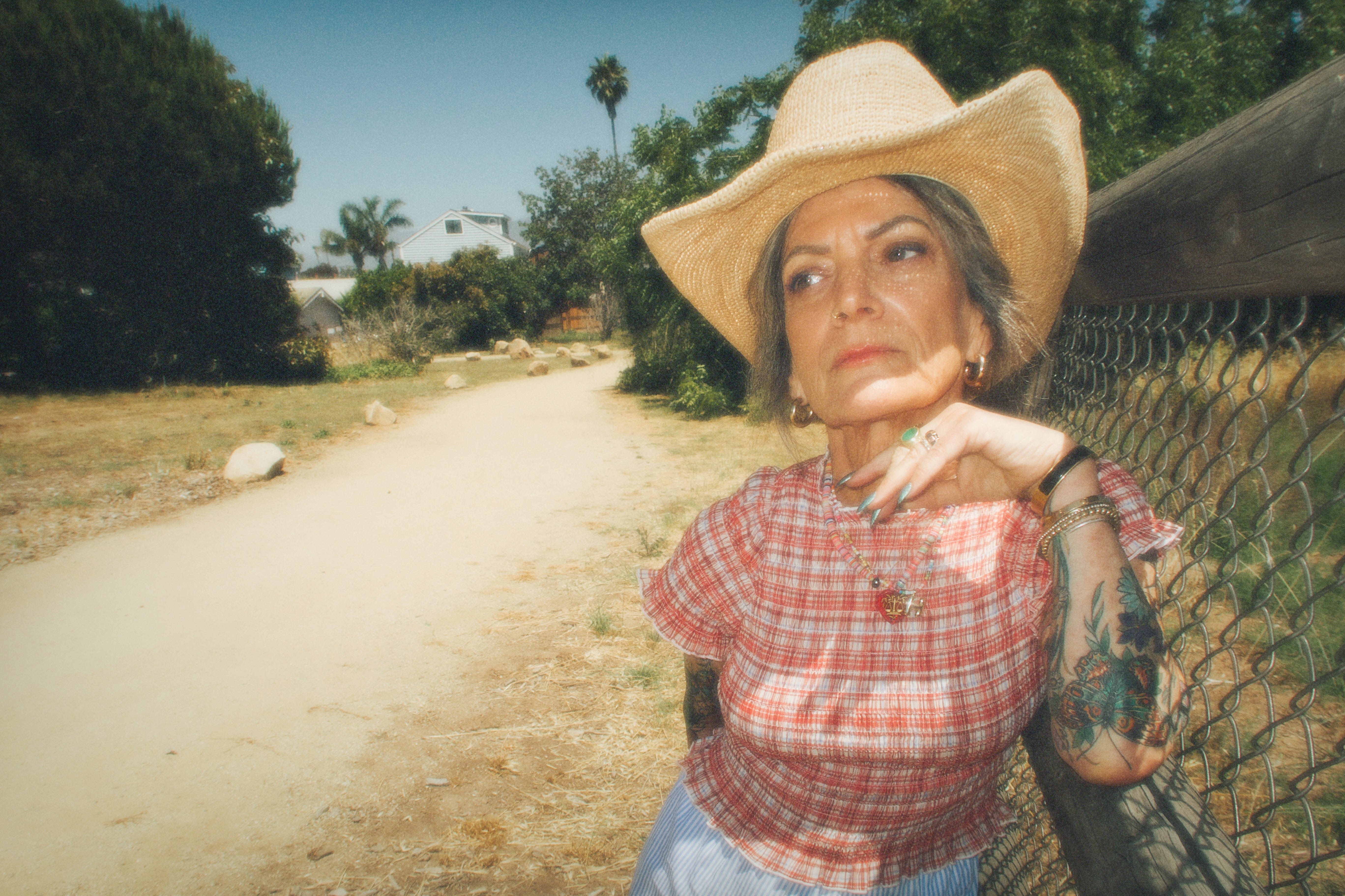
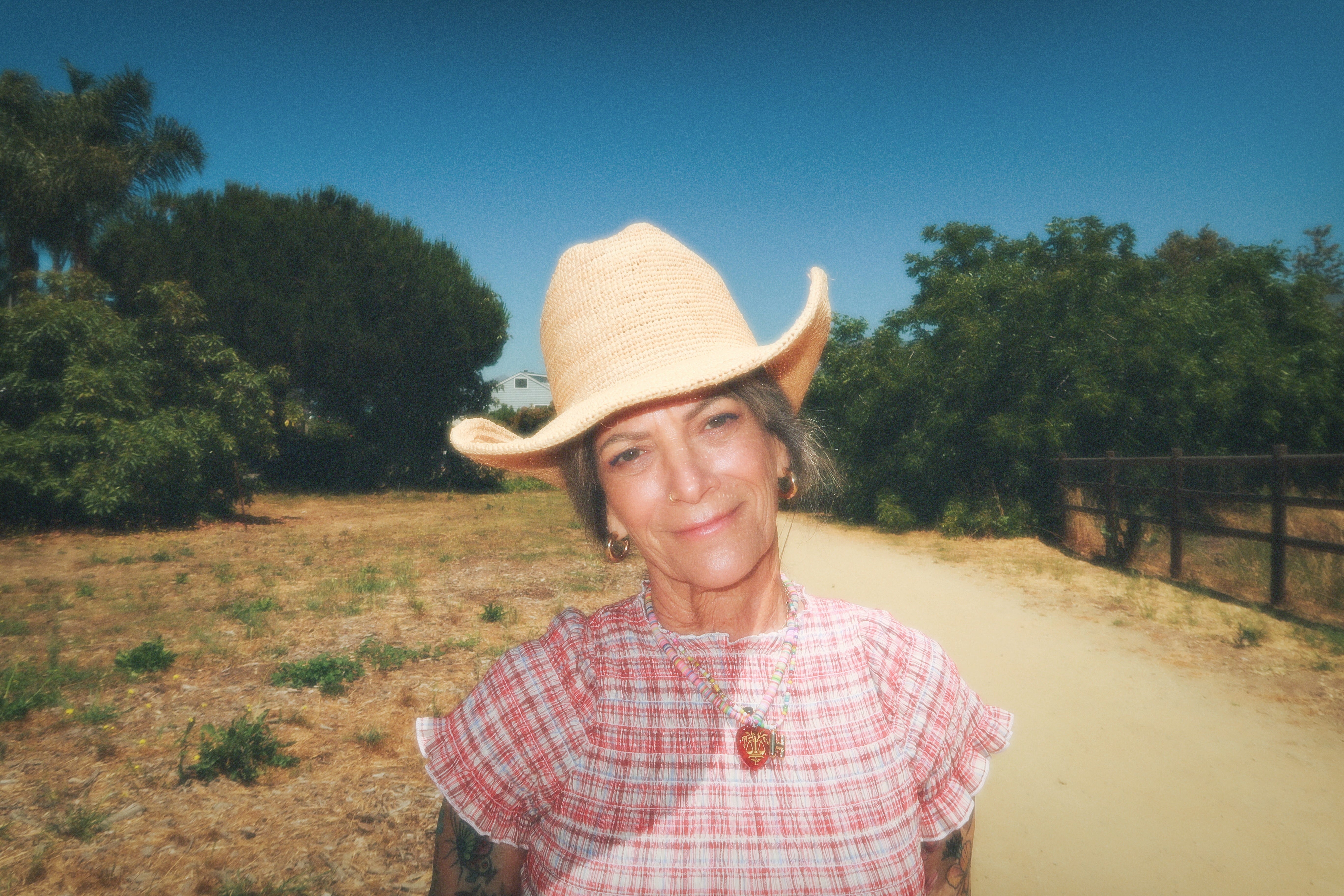
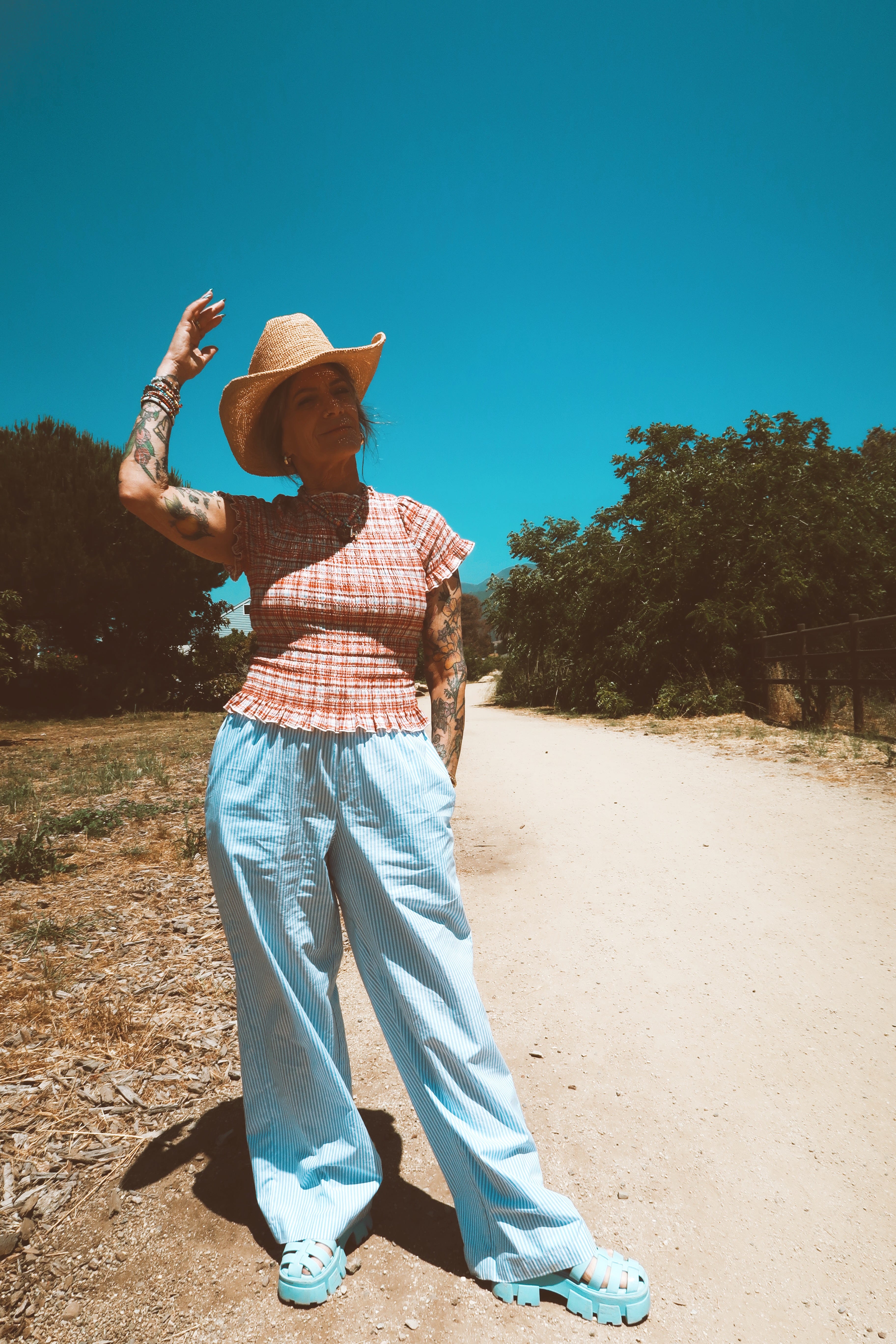
Heidi Clements gives no fucks — and not in the way one might declare as much to smooth out the sting of actually giving a fuck.
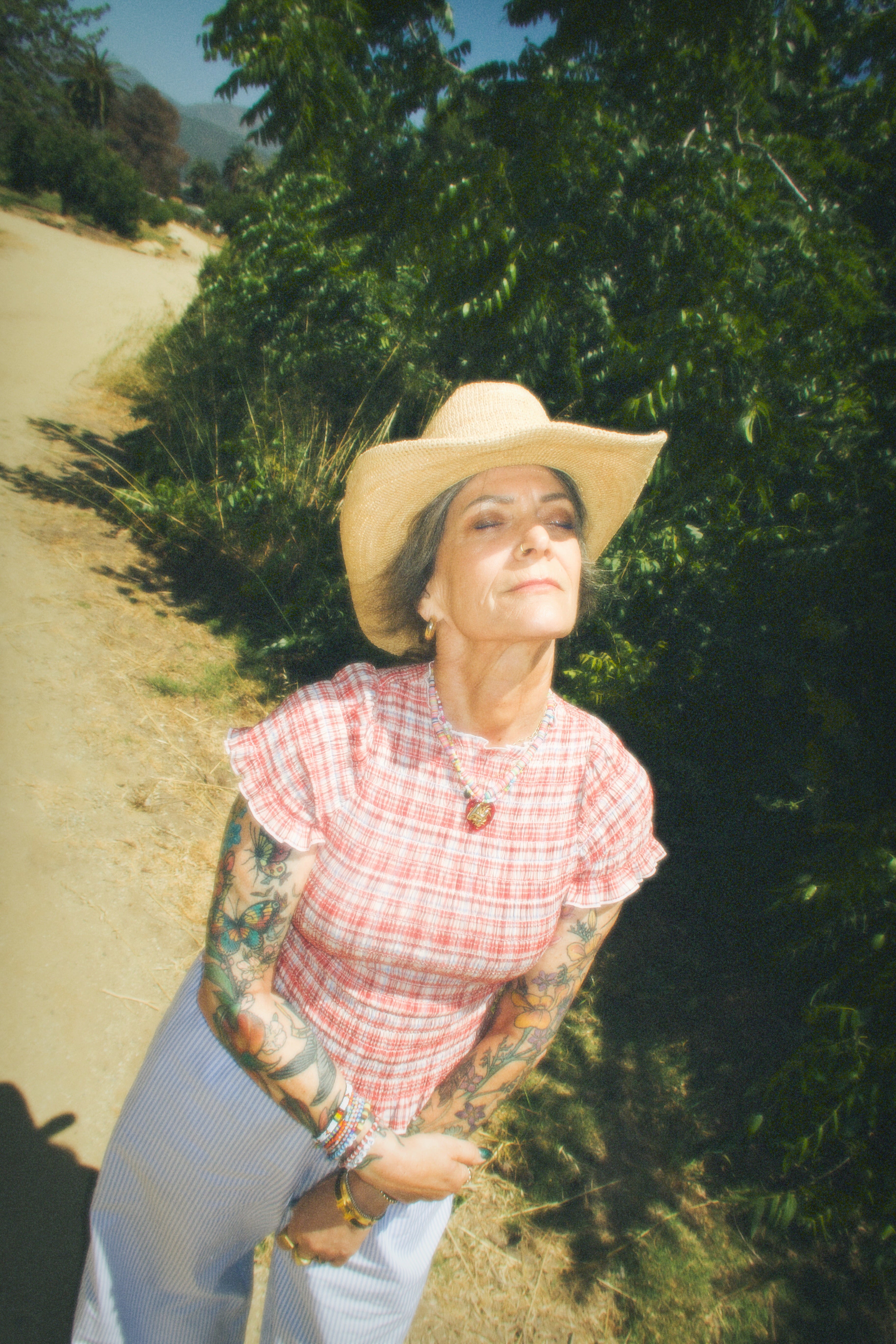
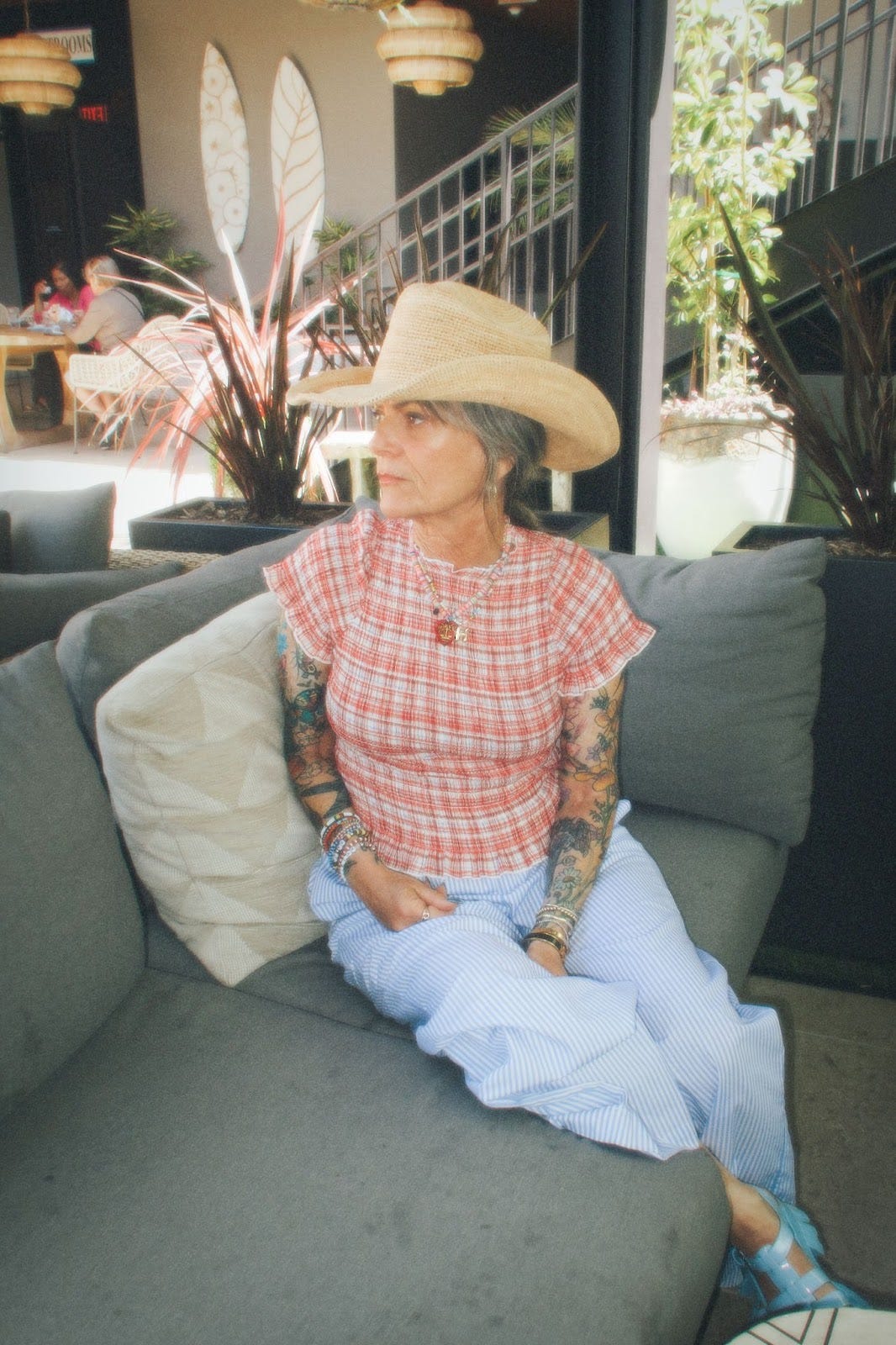
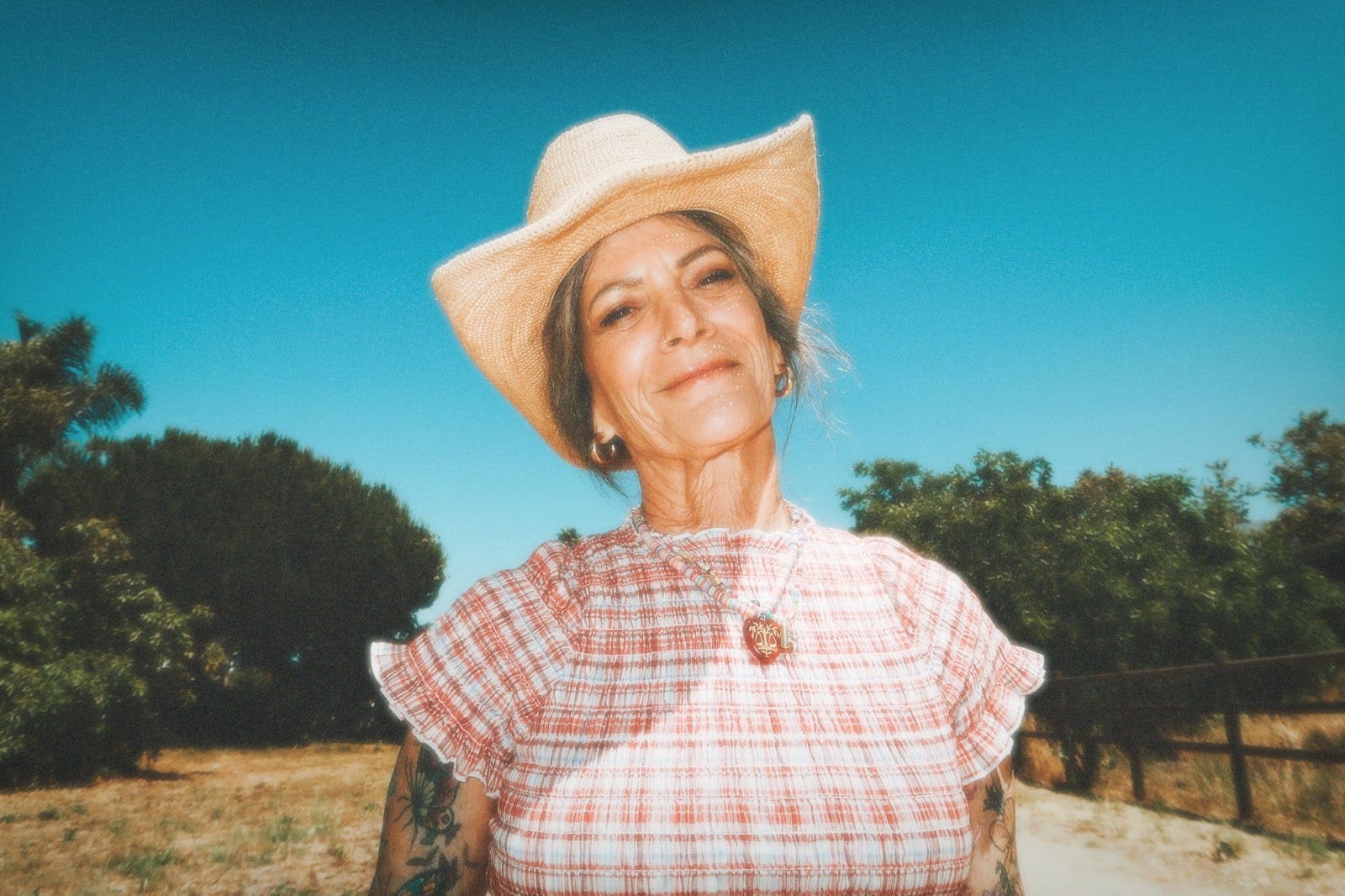
Hers is sincere; the kind hard-earned by dint of being a woman over the age of 60 who proudly puts herself on the internet, wrinkles defiantly not smoothed out.
It’s a refrain she repeats more than once during our time together in the bucolic California beach town she lives near.
The behind-the-scenes writer of popular TV sitcoms and entertainment news shows like Access Hollywood is finding unexpected success in front of the camera as a content creator, where she shares what her life is like and bullishly busts the myth of being too old or too anything to be who you are.
She’s amassed nearly two million followers as of this writing, with north of 20 millions likes on TikTok alone.
I am one of them.
And in our all-too-brief time together, Heidi let me in on the unconscionable trauma that solidified her resilience at an early age, from being drunk throughout her 20s and 30s and getting sober for the last 25, to being raised by a mother who did not understand her and left her to “mother herself.”
Heidi may give no fucks, but to those of us lucky enough to find her, she gives everything.
Read on for her stunning insights on what it took to get here.
Molly: OK, Heidi—this week is monumental for you. I mean, does one say congratulations to sobriety?
Heidi: For sure. Every day that you're sober is a day to celebrate, but 25 years—that’s just a wow. I never thought I could actually do it. To be able to say I’m a quarter of a century in... it’s impressive. I know how hard it is to quit drinking, but I also know it’s the best thing you’ll ever do if you’re having problems with alcohol.
Molly: I would love to understand—if you’re comfortable sharing—anything about what was going on 25 years ago when you were still drinking. Was there one thing? An accumulation of things? What was happening in your life that led you to feel like, “I need to self-medicate”?
Heidi: I should have quit long before. I had like 50 warning signs:
“Oh, you almost died last night.”
“You almost got arrested.”
“You got pulled over.”
Any one of those should have been the signal to quit drinking.
But the truth is, I woke up one morning before work and had a glass of wine. I decided to get drunk. And I knew at that moment that I was now threatening my livelihood. I’m a single person. I don’t have rich parents. I don’t have a big bank account. My job was everything. And if I was going to lose my job over liquor, I had a problem.
I instantly called everybody I thought should know and said, “I’m an alcoholic. I need to quit drinking.” All of my friends already knew. My mom was ashamed of me for admitting it—but that wasn’t surprising.
Then... I got drunk for the rest of the weekend and that Monday was my first day of sobriety.
Molly: Cold turkey?
Heidi: Cold turkey. I tried to go to an AA meeting. It was awful. I felt like—my problem’s not that big. I didn’t want to admit I was “as bad” as the people who were sharing.
So my own ego probably helped me stick it out. I didn’t know how hard it was until a few years later. I’d think back and just burst into tears. Holy shit, that was really hard.
And I had no one. No one to talk to about it. You just didn’t talk to people about stuff—especially women. You didn’t talk about menopause. Perimenopause. Aging. Nothing, really. Just do what you’re supposed to do: get married, have kids.
I was 40, three months sober. I had no children. No significant other. And I needed to heal.
So I spent the time most people use settling down just... fucking finding out who the fuck I was.
Molly: There are so many things I want to press on, Heidi. Something that jumped out immediately—because even with all the progress we’ve made, women who don’t want to settle down and have kids still get side-eyed. And it sounds like you were very attuned to that in your 30s.
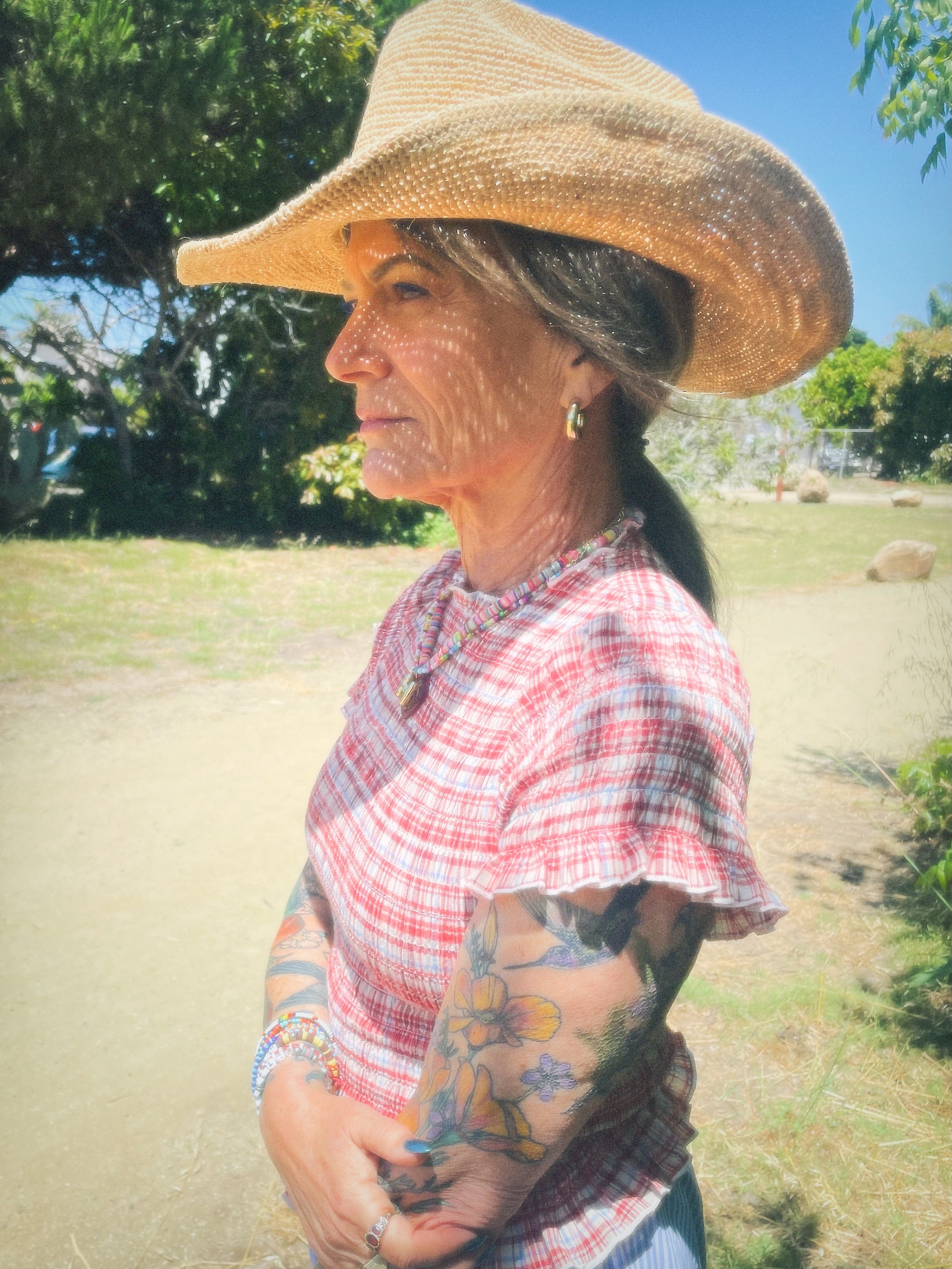
Heidi: I was. But I was still called an old maid. Still shamed for not being with somebody. I mean—what isn’t shamed in women? Everything that isn’t marriage, baby, career—that’s seen as “wrong.”
I was never thrilled in relationships. I was only ever comfortable when I was drunk. Why? Because I was molested as a child. Why didn’t I want to get into it when I got sober? Because I was raped while blackout drunk.
Like—who the fuck wants to go near men?
When you finally wake up and realize who you are... the last person you want to be with is the one responsible for getting you to that blackout place.
I always say: I have no shame about what happened to me. Because I didn’t do it. It was the result of what happened to me as a child.
And even further back than that—my parents didn’t nurture me. They raised me like a fucking wolf. Just tossed me into the world like, “You’ll be fine.” “What are you complaining about?”
Molly: You posted something recently I loved—something about the voice in your head at 13 sticks with you for life...
Heidi: Oh! Yeah. I was fat. My boobs were enormous—which, surprise, I eventually cut them off.
I was stupid, according to my mom.
And this stuff sticks with you. At 13, when you’re developing, your brain gets stuck. I still have body dysmorphia. I don’t know when that’s gonna go away.
Molly: I’m curious—on some level, do you think your parents saw your creative, artistic spirit—like, your tattoos, your style, your expression—and thought, “Oh no”? Like they just wanted to control what was different?
Heidi: I was a nightmare for my British, strict parents.
I posted a photo today—me and my mom, and I’m wearing a shirt that says “FUCK YOU. FUCK OFF.”
She was horrified. She loved me, but she didn’t understand me at all. Neither of my parents did.
I felt like a giant disappointment in so many ways. And I didn’t care. I mean—yes, part of you always cares what people think. But it didn’t stop me from pursuing the life I wanted. I wanted it to be fun. Curious. I wanted to do stuff.
I didn’t want to get married and have kids. I mean, I did at one point. But I was too busy being drunk when I would’ve needed to make that happen.
Molly: Were you always this bold in pursuing your curiosities? I know you were a rebel, but was there ever a time you felt like, “I have to do X”? Did drinking help numb that?
Heidi: My drinking was a direct result of shutting off the voices in my head.
They were loud.
“You’re not good enough.”
“You’re not pretty enough.”
“You’re not doing life right.”
It’s funny. I get so many kind comments now—“You’re so beautiful.” I never heard that in my life. Ever.
And maybe people thought it back then, but they didn’t say it.
What people are responding to now, I think, is what’s inside. I’m very inward-outward. I’m authentic. I don’t care what people think.
Deep down, I never cared what people thought. But it was always a battle.
Molly: When did that change?
Heidi: 60. Maybe.
Molly: What were you doing in your 20s and 30s? You were a writer, right?
Heidi: In my 20s and 30s, I was working in television. Non-scripted stuff—news and magazine shows. I worked on A Current Affair. I was learning how to be an anchor writer. I created a job that didn’t really exist before—writing for the anchor.
I always wanted to be a scriptwriter. I wrote a script at 36 about tabloid TV—the wars between A Current Affair and Hard Copy.
I moved to L.A. with that script.
Molly: Where are you originally from?
Heidi: New York. Staten Island. I lived there for 18, 19 years.
Molly: So your formative years were NYC in the ‘80s and ‘90s?!
Heidi: The best time to live in New York. Madonna. Warhol. China Club. You could afford to live there. You could be an artist.
My apartment was $1,200 in 1985—a two-bedroom. And that was expensive.
So I came to L.A., had that script. A CAA agent read it and called me in. Said it was amazing. But—too many characters. Too complex.
They said, “Is it a drama or comedy?” Because back then, dramedy didn’t exist.
They also said, “Nobody’s going to give you money for this. You’re a nobody.”
But they offered to help me get staffed on a show. And I said no—because the salary was way less than what I was making at Access Hollywood, where I was head writer.
So I gave up writing—for money. But I kept writing scripts.
One day, my friend, a producer on Sabrina the Teenage Witch, said, “I have to pitch three shows and only have two. Can I pitch that one you sent me—Syco?”
It was about how men and women hear the same sentence completely differently.
He pitched it. That’s the one they bought. UPN bought it.
And then the next day—UPN folded.
Molly: Nooo...
Heidi: But it became The CW, and they picked up our script. We shot it with Nick Lachey and Lindsay Sloane. The most magical experience of my life.
But the night before upfronts, Les Moonves said, “I don’t like this show.”
And that was that.
So I gave up again. But I kept writing. That same friend later sold a show to Freeform. He brought me on, and 100 episodes later—it ended in 2017.
I ran the writers’ room. Did all the things I wanted to do.
After that, I decided I only wanted to write about women in their 50's and nobody has bought a script since.
I have five of them sitting on my desk. One is basically Sex and the City meets Golden Girls—which I wrote two years before And Just Like That.
Molly: I mean, you’ve clearly struck a nerve—in the best way.
Heidi: I struck my own nerve, you know what I mean by that?
Molly: Yeah.
Heidi: Being on social media—I never had any goal of being an influencer or creator or whatever people call me. I don’t feel like an influencer. I don’t know if I influence people to buy stuff so much as I might influence them to live a happier life.
Molly: Yeah, hi – me!!
Heidi: I don’t know what brands want to get behind that. Not many, turns out. But it wasn’t a goal. I just started posting. I started with outfits. Then I started telling stories. And when those stories started resonating with people—those young Gen Zers gave me permission to keep going.
I’m always talking to myself first. I’m therapizing myself. I’ve figured so much out just by listening to my own stories—by writing the stories I’m telling.
It’s been such a rewarding journey. Honestly, the most rewarding thing I’ve ever done.
Molly: What was the ping—or the initial whisper from the universe—that told you, Heidi, share yourself. Share your story?
Heidi: I’ve always done that. I had a blog long before this. I wrote a book 12 years ago with crazy stuff about myself. I’ve never been shy about sharing the dumb shit I’ve done. Ever. I find it all really funny. And I have absolutely no shame in it.
Molly: Was there ever a time—I mean, you said earlier you always deep down didn’t care what people thought—but was there ever a moment you wavered?
Heidi: No. Never. I don’t like other people putting their shame on me. If I didn’t kill somebody—what’s so bad? I’m living my life. I’m sorry if it’s not a life you find respectable—but it works for me.
Molly: Yeah. And that’s what matters. Everyone should have the opportunity to live their own life. Make their own decisions. Chart their own course. It’s not up to anyone else.
Heidi: Exactly. Your soul picks this life to fall into. So listen to what that soul wants to do.
Molly: Was there ever a point, though, when you weren’t listening to your soul? And how did you course-correct?
Heidi: I always course-correct. I know it when it’s time. I’ve quit every job I’ve ever had with no money in the bank, because I heard the voice inside say, You gotta go. And I’d say, “Okay.”
I listen to my inner self all the time. And I don’t understand why anyone spends a single second being unhappy. I don’t get it.
Molly: I think that’s becoming clearer to me now that I’m actually trying to change my life—as opposed to just my job. In the beginning, I thought I was changing my job... but I was trying to change my whole life.
Heidi: Right. I’ve been lucky, in the sense that I’ve always had a little bit of a safety net. I’ve had friends who saved me. The same friends, actually, that saved me during the pandemic. I’m so grateful for them.
Molly: And when you say saved—do you mean financially?
Heidi: Yeah. Financially. And I think that’s why most people don’t do what they want to do. Finances hold them back.
I came up here and got to live for free for five months. You can do it. You have other friends. You can couch surf. You just have to ask.
Molly: Be brave enough to ask.
Heidi: Right. And that was hard for me. My childhood made me hyper-independent. No one’s coming to save you. You have to do it yourself. That’s what my parents taught me. So it was really hard to ask for help. But every time I have—it’s turned into a beautiful thing.
Molly:Do you have an end goal or vision for where all this is going?
Heidi: I don’t know where things are going to lead. I really don’t. I’m focused on what’s present.
You can’t possibly know where you’ll be. You think I thought I’d be dancing in my bra and underwear at 65 and getting paid for it? You think I thought I’d have almost 2 million people listening to me?
Never!
The only thing you can do is chase happiness and joy. Because that leads to more happiness and joy. That’s the only thing I know for sure.
If you’re having a bad day, figure out how to have a good one tomorrow.
And don’t stress about the rest. Keep the other stuff in your head. All those quiet manifestations you don’t even realize you’re doing... those are the things that actually happen.
Molly: I love how you said that—quiet manifestations.
Heidi: Because it can be exhausting to consciously manifest every day. And then one day something shows up and you’re like, I wanted those shoes 20 years ago—and there they are.
Molly: And the quiet ones are often the most meaningful.
Heidi: Yes. I believe your higher self knows what you need. Even when you don’t. The universe is listening. And the universe does not want you to be unhappy. Why would it? Its job is to help you be happy.
Molly: I think so much of what I’m trying to convey in this interview series is that—to be who you are. It sounds so simple in theory but it’s the hardest thing.
Heidi: It’s scary. Because people are scared of your lack of fear. They’re scared of your confidence. They’re scared of your belief in yourself—because they don’t have it.
And those voices—their fear—can drown out your own.
Molly: When you were younger, did you visualize yourself as a writer? Someone behind the scenes? Because now, it’s you. You’re front-facing. Did you see this coming?
Heidi: On some level—yes. I wanted to be in front of the camera. I wanted to be an actress.
Molly: You did?!
Heidi: Oh yeah. My parents told me that was stupid. So they sent me to college for anything but acting. So I figured out how to be a writer. I became a behind-the-scenes person.
In a way—this is like a quiet manifestation. Or maybe a loud one. Because I did want this.
Molly: And you’ve always had this incredible presentation—your style, your presence.
Heidi: I don’t think I always had that. I think I learned style over time. Watching Sex and the City, Patricia Field, Jenna Lyons taking over J.Crew. I realized—Oh, you can mix all kinds of stuff together? Okay.
I’d say it wasn’t until my 40s—after I got sober—that I started embracing style.
And really embracing my style didn’t happen until TikTok and Instagram.
Molly: How would you describe it now?
Heidi: Grown-up Billie Eilish.
Molly: Obsessed.
Heidi: I don’t want to wear tight jeans and tight clothes. People always say, “You have such a beautiful body—why don’t you show it off?” And I’m like, For who? For what?
That’s actually the most powerful thing I’ve done—fully decentering men.
I don’t need a partner. I’m okay. If someone falls out of the ceiling, great. But I don’t care how you look at me. I don’t care what you think of me.
I. Don’t. Care.
Molly: Which I think—because you’re so give no fucks—that’s when it happens, right? When you’re just, like, “I am who I am,” and you become magnetic.
Heidi: It’s so disappointing, though. Men are so disappointing.
Molly: Something I’m noticing in this whole conversation—you really have a mindset of abundance that I admire. Even when you talk about asking your friends for help, there’s this implicit trust that things will be okay.
Heidi: I used to struggle with scarcity. My parents didn’t have money. Everything was fear-based—The bottom’s gonna fall out.
That paralyzed me for a long time. And even now, I work on it daily. It’s the hardest thing I work on—not seeing the lack.
I could tell you right now: I don’t have a job, I have two months’ rent in the bank, I’m living in someone else’s house rent-free, I can’t afford a vacation...
Or—I can flip the story.
I wake up surrounded by trees and sunshine. I have beautiful friends. I built a property that brings me peace. I am fine.
Molly: So this is usually my last question—but honestly, you’ve been answering it the whole time. What advice would you give to people who are struggling—people who want to trust themselves, embrace abundance, or just... be who they really are?
Heidi: It’s so important to figure out why you are the way you are. And that usually goes back to childhood. What’s really stopping you from living beautifully?
When you hear yourself say, I’ll never have that—ask yourself: Where did that belief come from?
You can’t move forward until you deal with where you came from.
You can’t just sit around waiting for life to happen. You have to make your life happen.
You are the writer, the director, the star of your movie. So make it a movie you want to watch.
So my advice is—don’t settle. Don’t accept what you’ve been handed as all there is. You can create your joy.
You can build a life. You just have to start by walking away from the things that make you feel small.
Molly: Wow, Heidi, you’ve given me so much.
Heidi: That’s the writer in me. The writer in me is always working.
Connect with Heidi here.
She is a true gem
I love Heidi so much. I’ve been following for a while and I aspire to be like her.