



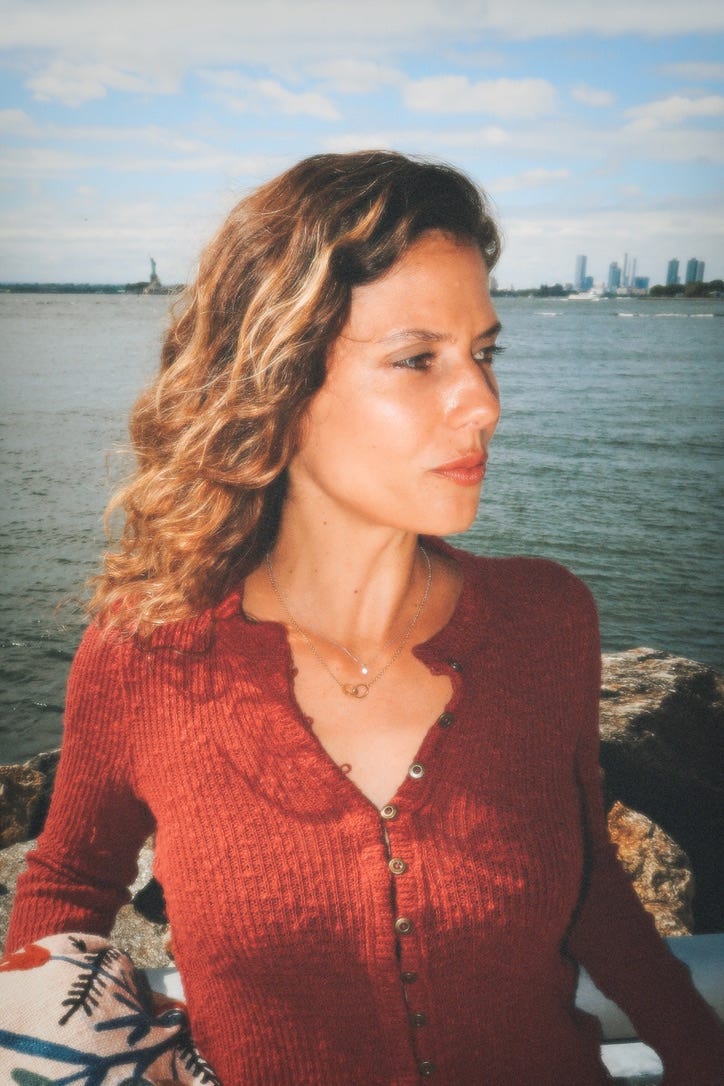
I found Ariella Steinhorn through her Substack, Nonlinear, where she writes with scroll-stopping vulnerability about power dynamics, work culture, relationships, and love.
So it’s fitting that I fell in love with her writing the way one might fall in love with a person. Her words spoke to me: poignant, poetic and peppered with common ground language tantamount to wordless chemistry between two people.
Beyond our shared interest in those “who don’t fit the usual mold or boxes,” our common ground was comms.
Like me, Ariella was paid to wield her pen, crafting media-friendly narratives and ghostwriting for the employers that hired her.
Unlike me, her brief but life-altering time at behemoths including Uber and a subsidiary of WeWork exposed her to the dark underbelly of tech overlords, who insisted on sanitized versions of truth for the sake of profit over people.
Her words were her livelihood, but also her power.
So when Ariella’s words were taken from her, twisted and defiled by high-ranking men and the systems designed to protect them, she was effectively stripped of that power.
She has since reclaimed it by amplifying voices that have been silenced – from whistleblowers at Palantir to Boeing – which she brilliantly illuminates alongside journalist Eli Rosenberg in her second Substack, Hard Reset.
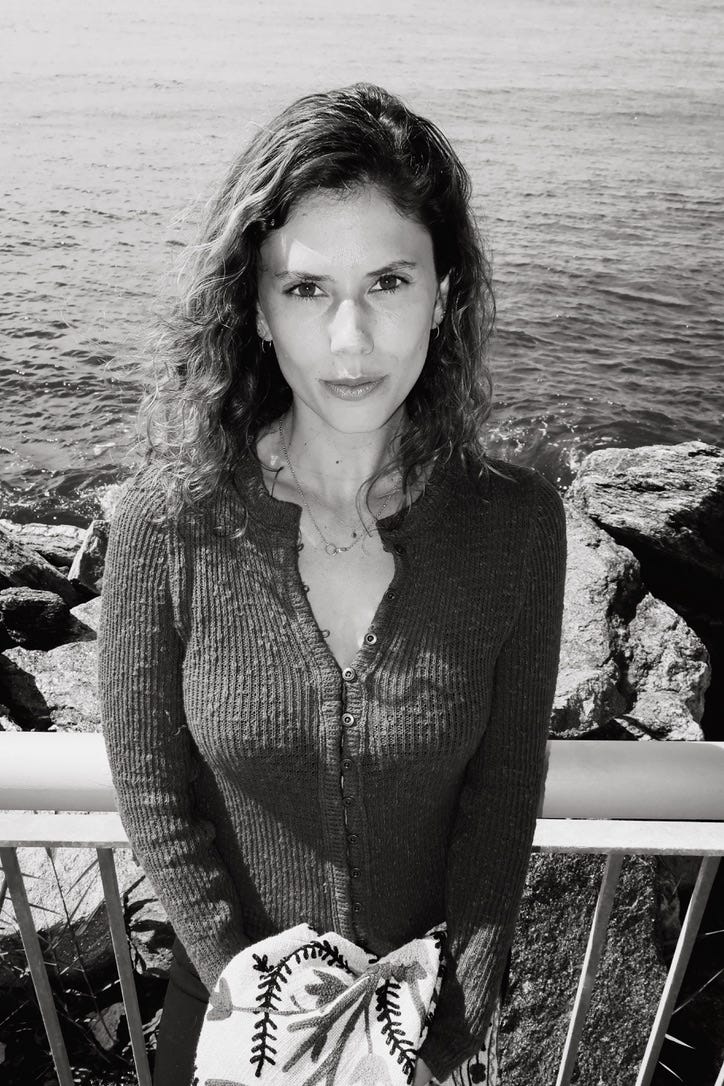
It is this fearlessness in holding power accountable that struck me about Ariella when I first met her, whose petite frame and pixie-like face seem at odds with her outsized boldness.
But I quickly learned in my conversation with the fellow logophile that the real gift of giving voice to others was that she found her own.
Read on for Ariella’s wisdom on why living truthfully is non-negotiable, and trusting the world will catch you.
Molly: So Ariella, you’ve made a name for yourself speaking truth to power. Can you take us back to when you started to feel that maybe this was your calling—that telling these stories and helping others do the same was something you had to do?
Ariella: I think it was always in my DNA. My dad’s a civil rights historian, and I grew up on his stories—entertaining, but always with a moral.
When I entered the working world in comms, I realized a lot wasn’t as it seemed. I was helping create “better” versions of stories without knowing the whole truth. And because I’m so curious, I wanted to know every facet—probably to the annoyance of colleagues who’d say, “Why do you care?”
I also went through a series of tough workplace experiences where I felt cornered, boxed in, stripped of agency. I kept asking: Is this really what the world is demanding of me?
I saw this obsession with winning, and I didn’t even know what we were winning. Yes, money matters, but I felt claustrophobic and stuck. Now I’m more committed to civil and human rights, but my path is also more complicated than that.
Molly: Are you comfortable sharing a little bit more about the companies you worked at in this corporate comms environment? I think it's an important context around what that “box” felt like and what you were starting to notice.
Ariella: Totally. Uber was the first big one where I worked—I was 22, so young.
My very first manager was wonderful and is still like a big sister to me. But there were constant reorganizations, and I was doing the work of people ten years older. I felt like my colleagues didn’t want me there because my presence might threaten their jobs. It was competitive, and I’m just not a competitive person. Only with myself.
I’ve always been more of an observer.

Molly: You mentioned being pushed into certain boxes in these jobs. What were some of those boxes?
Ariella: In comms, you’re boxed into telling one specific story. I was envious of journalists, who got to go deeper.
Then there was the box of being a young woman working closely with tech CEOs—usually men in their late 20s to 40s with immense power and money. They were often treated like “boy geniuses.” I got to know some of them well, and they confided things that honestly scared me because I realized how unstable things actually were.
Externally, people assumed I was dating them—even before anything happened. At a happy hour, a colleague told me, “He’s into you, I can tell.” At another company, rumors spread that I had slept with the CEO after a work trip, which wasn’t true at the time. But eventually, I did. It became this self-fulfilling prophecy: people projected that narrative, and I felt boxed into either fulfilling it or constantly trying to defy it.
And when you’re young and told hundreds of times what your “value” is, you start to believe it.
Molly: Right—and I notice the way you said, “I was so young and had so much work to do on myself.” It feels like you’re partially taking responsibility when really, these were men in power knowing what they were doing.
Ariella: Looking back, I don’t regret any of it—it was formative—but at the time I internalized a lot of blame.
Molly: So post-Uber, you went on to WeWork, right?
Ariella: Sort of—I joined a startup called Managed by Q, which was later acquired by WeWork. Before that, right after Uber, I joined a small transportation startup. What I didn’t realize was they were about to freeze hiring—they were running out of money. The CEO had misrepresented their fundraising by over $100 million.
I realized the emperor had no clothes. It was sad, too, because I actually liked my colleagues and the idea. But when it turned out to be a fraud, I felt like, Am I a fraud too? I was only 23.
Molly: So young—and already realizing maybe there was no safety net, no real stability.
Ariella: Exactly. But even then, I wasn’t ready to let go of the idea of a safety net. In my personal life, I was chaotic—dating a ton, escaping. Professionally, I went back into the Matrix. An old Uber boss connected me with another startup CEO looking for a comms person. I knew it could be risky, but I said yes because it felt like a good career move.
Molly: I love that you call it the Matrix. So what happened at this next startup?
Ariella: Rumors started almost immediately. Later, the CEO admitted that the first time he interviewed me, he knew he was going to sleep with me. At the time, I rationalized everything—told myself maybe it was meant to be, maybe this was some tortured, passionate connection. He gave me affirmation professionally and romantically, so I justified his words and behavior.
It became a love-hate dynamic that lasted a little over a year. Eventually I realized I had to leave. He would never have fired me, but I knew I had to get out for my own health.
Molly: Wow.
Ariella: Now I follow my gut. But I think it takes a long time for a person to really do that when there are so many external forces telling you not to. If you’ve been sitting in a feeling that’s deeply uncomfortable for a long time—your nervous system is dysregulated—get out. The world will catch you.
Molly: I want to fast forward a little bit, but also not skip over anything important that gets us to where you are today. Within this ten-year span—from starting out in the tech startup world to where you are now—when did you finally break out? You now help people break NDAs now. How did that come about?
Ariella: So the last job I really had in tech was after that startup we just talked about. And it was after that experience that I thought, I need to get out of this. That was the turning point.
Molly: That last job in tech—was there something that happened there that lit the fuse for what you’re doing now?
Ariella: Oh my God, yeah, this was a blockchain company. I very quickly realized it wasn’t actually about any of the things they said it was about. It was about the price of the coin they were pumping. But they had this wrapper of “innovation” on it.
And when I started asking questions, I realized it was all a scheme to pump the token. Then they just…isolated me. I was told I was terrible at my job. The HR person put me in a room and goes, Everyone thinks you’re terrible at your job. No one wants to work with you.
Mind you, the previous week my entire body had broken out in hives. I literally lost my voice. I had laryngitis.
Molly: I mean, the symbolism—your body is screaming, Get the fuck out of here. You’re being silenced.
Ariella: Totally. And so I’m told this, and I remember just running out of the conference room, almost gasping for air. I was like, I will prove you wrong. And I ran out of the room crying, collapsed in a bathroom stall, and was like, I’m done. I can never come back here.
After that, I was like, I can’t do this anymore. A friend connected me to an employment lawyer, and I negotiated two months of extra severance.
That was another inflection point: realizing I cannot be around unsafe people or unhealed people.
Molly: What a generous way to frame it, to say unhealed people. To recognize this isn’t me is such a mature lens to see it through. But there’s something about gaslighting—gaslighting a woman—that is so egregious to me. I mean, they lied to you. They made you think you were doing a bad job. That mind-fuckery is just so not okay.
Ariella: I don’t think then I had the framework or the terminology to know. I knew they were not good people, but I don’t think I understood why. And I think I still felt like—Where do I belong? I didn’t feel like I belonged anywhere, and I was so good at that—at internalizing. It was a really hard time for me.
Molly: I relate to that feeling of Where do I belong? When you’re not seeing people like you do it differently, it’s so hard to visualize another way.
So I’m curious. This blockchain chain of events—was that the tipping point?
Ariella: Well, I was like, Oh my God. Two months of pay? I can actually breathe for a second. I hadn’t had that ability, because I always had to pay rent.
The blockchain situation was so severe, and I was like, I am tired. I need a break. Initially they offered me just a couple weeks, but I asked for more.
Molly: So you have two months off, which is hardly enough to reset your nervous system after everything you’d been through. What were you doing to heal, to figure things out?
Ariella: I don’t know if I was really healing at that point. I was transitioning into another romantic relationship, so that took up a lot of my time. And then I also started working for myself. That was the moment I started consulting.
I was making a lot of money, actually, because I had a good network and journalist connections. Probably the most I’ve ever made. So I thought, This is great. But I wasn’t doing the deep work to heal. I was like, I’ll prove everyone wrong. I’ll build my own consulting business.
And then I started the first iteration of my NDA whistleblower work, called Simone. It was a database that connected people to employment lawyers and therapists.
It was this idea that those are two professionals who really helped me outside of the workplace. Everyone should have access to them, if they can afford it—which is its own issue. But those two people can actually help you move out of a bad situation.
Molly: Can you locate us in time?
Ariella: This is mid to the end of 2018. I was 25. I started Simone with the woman who ended up becoming the wife of the guy who connected me to the employment lawyer.
That was a whole other adventure. Because we were both unhealed. She had just gone through a bad workplace experience, and I learned this twice the hard way: it is never a good idea to start something with someone out of an angry experience you’ve had.
Molly: Was there significance to the name Simone?
Ariella: The idea was like Simone de Beauvoir, or Simone Weil, all these famous Simones who were writers and thinkers. And also the name Simone means “to hear”—to listen. I liked that. And then yeah—that became Lioness.
Molly: Tell me about that. Because to me, this is where the work is so extraordinary—where the capital-T “truth to power” journey starts.
Ariella: After Simone wound down, I was really interested in marrying the worker’s rights work Simone did with the storytelling background I had. The idea was to be a bridge between sources and journalists. Like, tech workers who had tea to spill about their companies but didn’t know how to contact a reporter.
Molly: Right.
Ariella: Even simple things like “on the record” versus “off the record”—people didn’t understand. Or they didn’t know how to shape their story so it would resonate outside of their internal worlds. The idea was to be that bridge.
Molly: I’ve asked you this in previous conversations, but have you ever been trepidatious about taking someone on—or getting involved with very powerful people, like Palantir, or other big companies you’ve helped expose wrongdoing at?
Ariella: There was a moment like that, but unrelated to fear. And I can explain.
Molly: Please!
Ariella: So long as I believed something was true, I wasn’t afraid. Partly because of strong defamation laws and free speech protections—but also because I’d already been through worse. My mental health had bottomed out, I’d dealt with awful relationships, and I knew I was resilient. What was Boeing or Palantir really going to do—kill me?
For me, living truthfully is non-negotiable. And it’s not just about exposing wrongdoing. Yes, that’s part of it, but it’s also about surfacing suppressed truths, giving people a voice, and creating space for expression.
People sometimes reduce my work to “exposing bad men.” But that’s simplistic. I don’t get a thrill from gotcha exposés. My passion is about making space for expression—in journalism, music, art, comedy. Creating is why we’re here; we’re not here to increase shareholder value.
Molly: You’re unlocking a memory for me—back in college I thought I wanted to be a lawyer, because it felt so important to help people make their case clearly.
People who are drawn to writing, speaking, conversation—we recognize the power of words, of getting as close to the truth as possible.
Sure, you could TL;DR it as Ariella helps expose bad people, but really you’re giving people a voice. It’s so much more than a valiant effort at “justice.” It’s expression. It’s art. That’s really what it is.
Ariella: Exactly. The beauty of connecting with people over stories—and then finding new stories with them—that’s why we’re here.
Molly: It seems like the more you honor your need to write and express, the more things fall into place. Would you say that’s fair?
Ariella: It is. It totally is. There were some tough moments where I doubted myself.
Because I freelance now, to support, to subsidize my writing career. There are definitely ebbs and flows, victories and losses. But I do finally feel that things are really coming into place. And that I’m also just doing what I feel like I have to do.
Drowning out the noise is a very important part of that. There are always going to be people who doubt. I remember at a friend’s wedding the other month—her family, I guess, said to one of our mutual friends: Ariella’s a writer? How does she make money?
I don’t care anymore. I just don’t. I’m going to focus on the things I can control.
But it’s always been [how I make money], when you really think about it. Writing as the comms lead, ghostwriting. Going back to childhood—I was a creative writer. I won short story awards when I was five, six, seven years old. So this is very much returning to that.
Molly: That’s been a common theme in these interviews too. There’s this return to your inner child. I mean, that’s what we’re all working on right now, right?
Ariella: Right.
Molly: Because as a kid, you’re just in that state. You are what you are. When you’re born, you’re kind of fully formed. And then you go through whatever shit, but your essence remains the same. Did you always see yourself as a writer in some way?
Ariella: I think I did. Yeah. I think I was just too afraid earlier on to actually take that path. Maybe I still had life to live and experience before I could even become the writer I am today.
When I went into the corporate world, my writing actually got so much worse. It got good for what those frameworks were, but much worse in other ways. And I had to deprogram away from that formulaic style.
Since then, I’ve been working on honing—not just sentence structure and free flow—but also not being afraid. And that’s a big piece of it: relinquishing the fear, going into these hard places, stitching together the words, but also asking, What am I trying to say?
Molly: What would you tell someone who is trying to tune into their voice, and who might be struggling to reconcile expectations with their soul’s desire?
Ariella: Oh, it’s such a good question. And I feel like that is the eternal question of being human: how you balance your survival needs for the body with what your heart or soul might need.
I think it’s so rare to find that balance. I think the first step is to not be afraid of your desires, and not think they’re silly, childish, or out of reach.
Also—to not get set back. Because there will be so many obstacles. So many. But what I’ve found is that if you pour everything you can, earnestly, into your work, and you keep trying in a good faith way—I do believe the universe rewards you.
I’m still exploring that spiritual side of myself. I never thought I was spiritual. I grew up in a very atheist, intellectual household, and I leaned that way. But over time I’ve become more spiritual, because I don’t think everything is some big strategy to be solved by academics. There are a lot of unknowns.
People have to have faith in themselves. They don’t need to have faith in God—but if it helps, they can. I do believe there is an energy out there. But the most important thing is faith in yourself.
Connect with Ariella here.